Into the mangroves: Costa Rica’s breathing borderlands
In the Into Nature way of travel, slow, attentive, and rooted, Costa Rica’s mangroves are not just landscapes, but living borderlands where time slows and life reveals its hidden layers. The tangled roots become sanctuaries for juvenile fish, herons, caimans, and for us, too, as visitors in awe. Gliding silently in a kayak or drifting on a small boat at dawn, you begin to sense their rhythm: salt and shadow, motion and rest.
Vital coastal ecosystems
Costa Rica is home to over 41,000 hectares of mangrove forests, spanning both Pacific and Caribbean coastlines. These intertidal ecosystems are made up of salt-tolerant trees and shrubs that thrive in brackish waters, where rivers merge with the sea. Dense and intricate, they play a critical role in environmental balance and community wellbeing.
Ecological Importance
- Nurseries for fish, crustaceans, and molluscs are essential to marine biodiversity
- Habitat for species like monkeys, crocodiles, and the endemic mangrove hummingbird
- Natural barriers against erosion, storm surges, and sea-level rise
- Carbon sinks, storing more carbon per hectare than most tropical forests
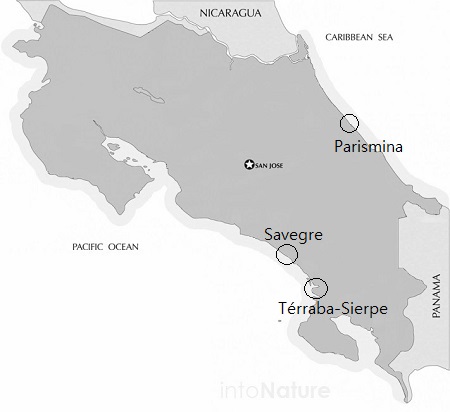
Notable Mangrove Regions
- Térraba-Sierpe Wetland (Osa Peninsula): The largest and most biodiverse mangrove system in Costa Rica.
- Pacuare & Parismina (Caribbean Coast): Wild, lesser-known wetlands teeming with birds and nesting sea turtles.
- Golfo Dulce: A fjord-like bay bordered by pristine mangrove corridors and hidden estuaries.
- Nicoya Peninsula (Tamarindo, Ostional): Smaller mangrove stands that support marine life and bird migrations.
A Gentle Way In
Travelling into Costa Rica’s mangroves means entering an ecosystem that absorbs carbon and softens the impact of storms, asking little in return. You will meet local fishermen who respect the rhythm of the tides and guides who know each river bend by scent and sound. It means choosing ecolodges and experiences that protect rather than exploit, journeys that move slowly and leave only a light footprint.
In Costa Rica, the mangroves are not just background scenery. They are brackish corridors into the wild, where nature teaches resilience in silence. Visiting them through an Into Nature lens allows you to experience not only ecological richness, but also a deeper sense of your rootedness.

Instagram Gallery